Betty Chan (Jovita)
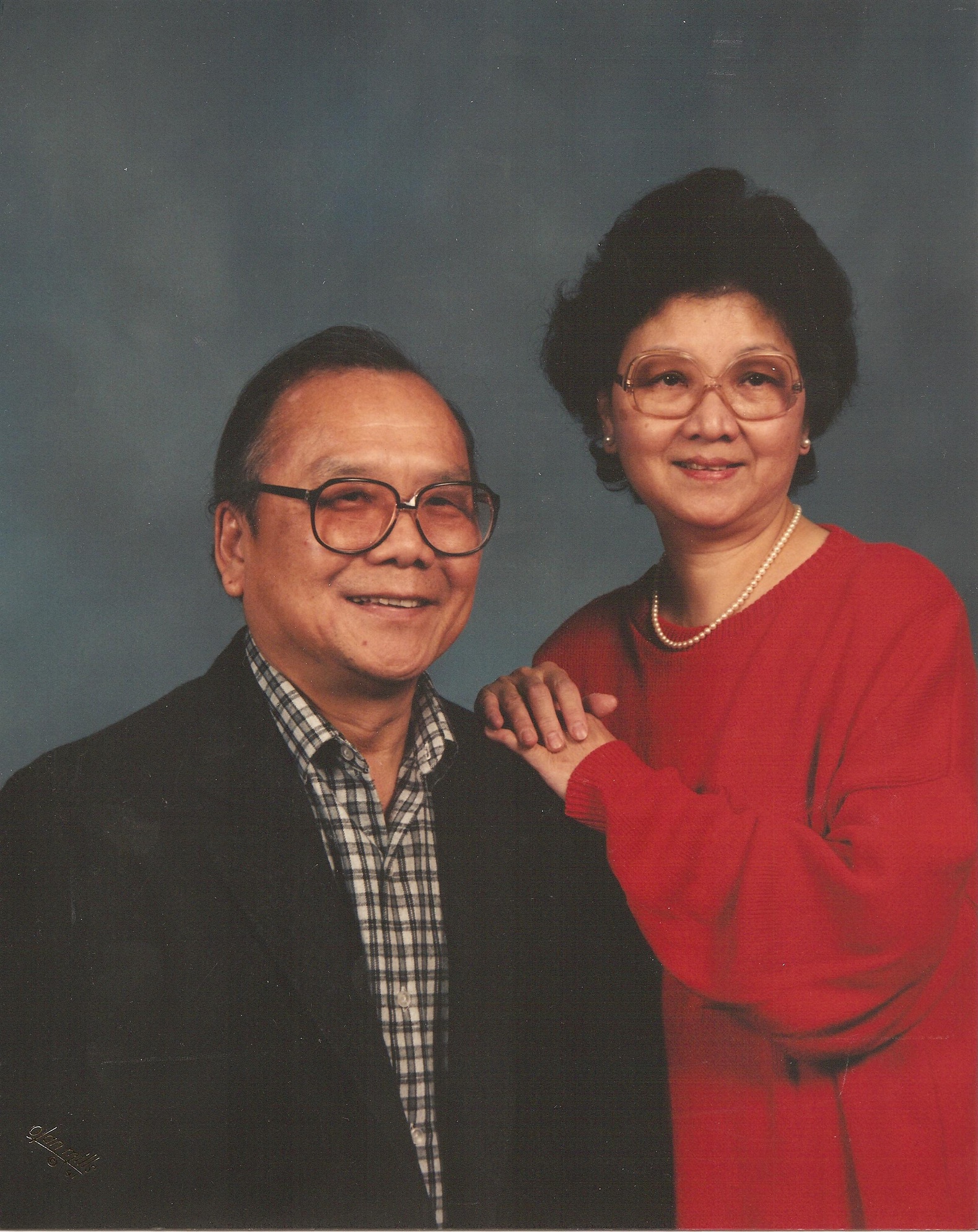
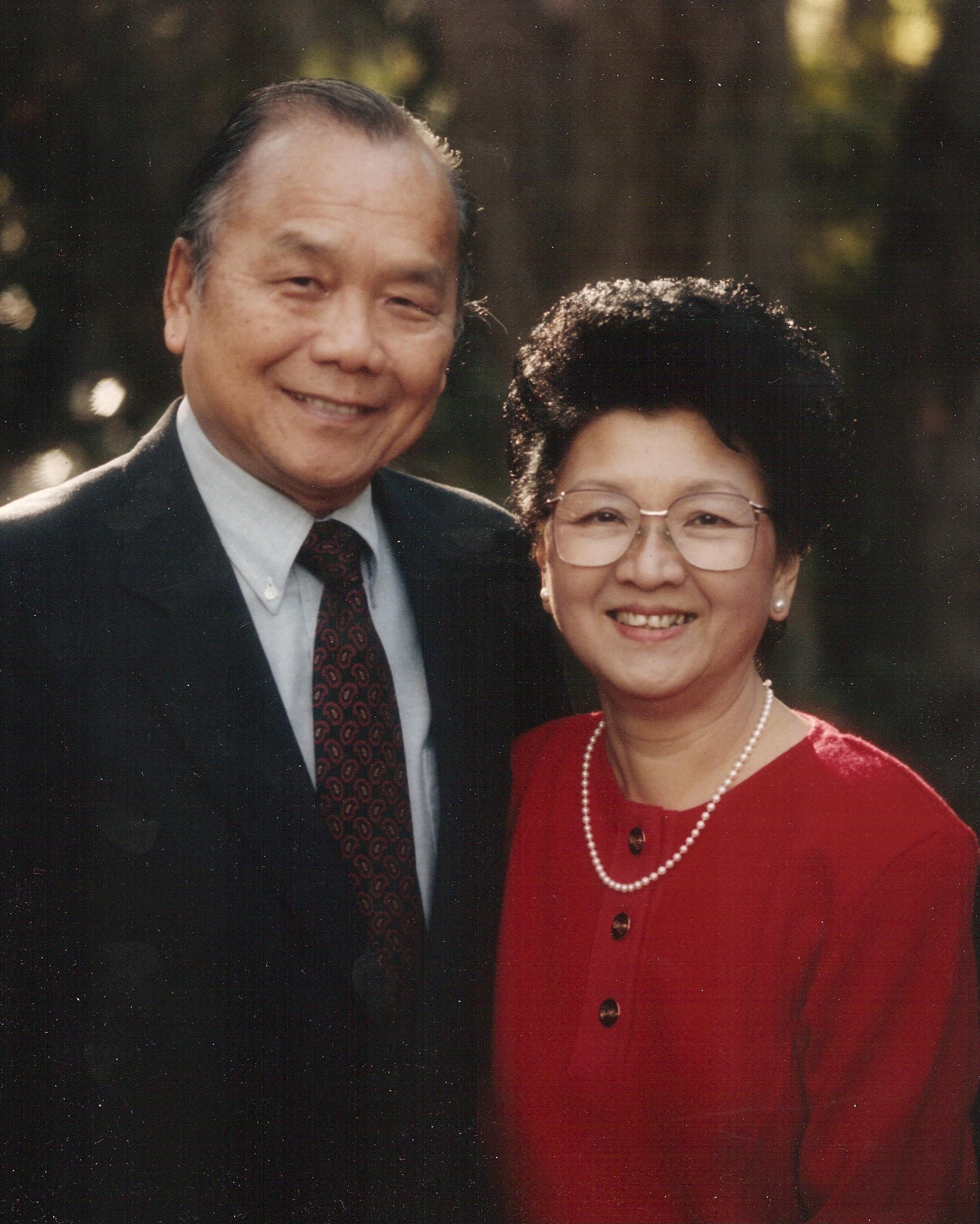
Vital Information
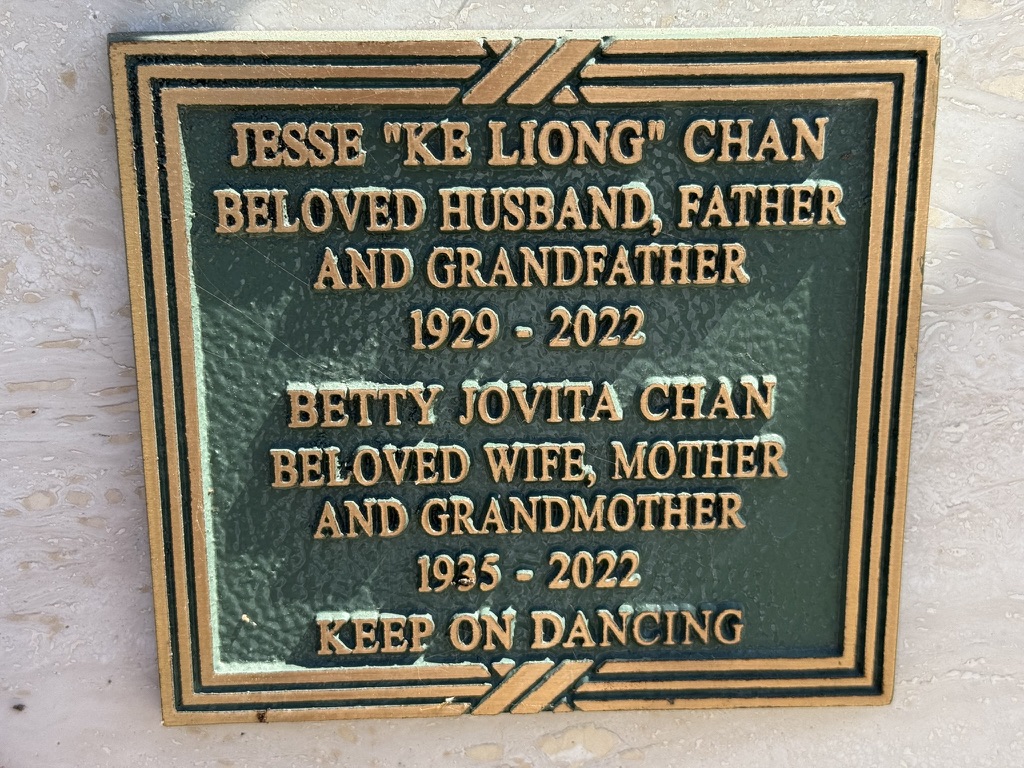
- Born: September 13, 1935 in Daet, Camarines Norte, Philippines
- Died: November 9, 2022 (age 87) in Alhambra, California
- Burial: Forest Lawn Memorial Park Glendale
- Known as: Betty Chan, Jovita, “Lola” (grandmother in Filipino)
- Parents: Benito-Lo-Kuchiam (Chinese), Ines-Chavez-Uy (Chinese-Filipino)
- Spouse: Jesse Chan (married 1957)
- Children: Rose Chan Loui (1960), Meg Chan Feitelberg (1963), John Louis Chan (1965), Michelle Chan Ng (1968)
Early Life and Family Background
Parents and Heritage
-
Father: Benito-Lo-Kuchiam - Chinese businessman from Lo Choo village (“Lo House” in Fukien dialect), Fuchien province, China
- President of Chinese Chamber of Commerce in Daet
- Managed copra export business to the United States
- Wore a gun (common in China due to village conflicts)
- Died in 1956, after Betty’s college graduation
-
Mother: Ines-Chavez-Uy - Chinese-Filipino from Tuliw, Malinao, Albay province, Philippines
- Father was Chinese, mother was Filipino
- Devout Catholic
- From the Bicol region of Philippines
Family Home in Daet
Two-story house with:
- Living quarters on second floor with large open sala
- Father’s office on ground floor
- Huge warehouse for copra storage behind office
- Chinese cook who prepared meals for family and employees
Siblings
- Brother (name not recorded) - taken to China by paternal grandmother and not allowed to return to Philippines
World War II Experience (1940-1945, Ages 5-10)
Flight from Japanese Occupation
When Japanese soldiers invaded Daet (no resistance from local government), the Japanese Commander asked Betty’s father to collaborate. Her father refused and secretly fled that same evening with his family.
Island Refuge
- Fled by small motorless boat to Mercedes fishing village
- Wooden navigator broke near shore with large rocks
- Filipino neighbors offered their vacation house on an island
- Family hid in forest cave when Japanese soldiers approached
- Japanese searched but did not find them
- Mother prayed constantly during hiding
Quote from Betty: “One thing I remember from during this time, is that I was very unhappy that I had to leave all my toys, which filled a whole bookcase. My toys. I loved my toys, but I was not allowed to take them. I remember this clearly.”
Aftermath
- Japanese took over family house and warehouse in Daet
- Japanese soldiers housed in the copra warehouse
- Family moved to mother’s hometown village
- Cousin Conching (young lady) had to hide far from village whenever Japanese soldiers wandered through
Manila Years (1942-1945)
-
Father decided to move to Manila for better opportunities
-
Long train ride to Manila
-
Rented three-story house in Binondo (Chinese district)
- House beside river near Juan Luna bridge
- Japanese garrison directly across the river
- Aunt (Jimmy’s mother) and her husband lived with them
-
Spanish Neighbors: Dentist father with four dentist children and one violinist son
- Became “very dear friends” who later saved the family
-
Father set up mahjong tables to earn income (“amateur version of a casino”)
Education During War
- Lived with Uncle Linda’s family on weekdays
- Attended St. Scholastica’s College for first and second grade
- Took piano lessons
- Taught Japanese by a nun
- Prepared for First Communion at Binondo Church (old Spanish missionary church)
Final War Years
- When Americans were about to retake Philippines, Japanese threatened to burn Binondo
- Spanish neighbor family offered their house in Sulu (end of Avenida Rizal)
- Cousin Tony’s brothers were shot in crossfire during this time
- Liberation Day: Mother was cooking Palitaw dessert when Japanese soldiers entered asking for food
- Mother gave them the dessert
- About an hour later, American soldiers arrived in weapons carriers/tanks
- Threw chewing gum and chocolate to people
- MacArthur’s promise fulfilled: “I Shall Return”
Betty’s refrain throughout her story: “By the Grace of God” - repeated after each narrow escape
Education
Elementary School
- Chinese school in Daet (1st-6th grade)
- Learned Chinese in morning, English in afternoon
- Girl Scout
- Performed in dance programs (including Moro dance where she forgot to remove shoes)
- Childhood friend Frances Hsu (reconnected years later in Los Angeles)
High School
- St. Scholastica’s College, Manila (boarder at convent school)
- Graduated 1952
- “Second Honorable Mention” - 4th in class of 70 students
- Strict daily schedule:
- 5:00 AM wake up for church
- Silent, timed meals
- Classes
- Supervised library homework by nuns
- Evening prayers
- 9:00 PM lights out
College
- St. Scholastica’s College - Bachelor’s degree, 1956
- Major: Mathematics
- Required Minor: “Home Culture” (nuns wanted graduates to become model housewives or nuns)
- Cooking classes included learning to kill chickens (students let go and made mess)
- Vice-President of graduating class (liked organizing parties)
- Got in trouble with dean for holding party with “slow drag” dancing
- Two classmates graduated cum laude (Betty was not one of them)
Career
Teaching Career
- Nuns gave her teaching job after graduation (1956)
- Dominican School, Taipei - Elementary teacher (during Taipei years, 1968-1990)
- Taught English to choir members in retirement
Eastern Textile Factory (Manila)
- Payroll Supervisor
- Supervised 4 people
- Prepared pay envelopes (with cash) for 2,000 factory workers
- Paid every Saturday
- Handled Petty Cash
- Husband was Purchasing Manager
- Husband served on Board of Directors
- Board split into two factions in 1967
- Husband’s faction sold shares at par value plus 20%
Marriage and Family
Engagement and Marriage
-
Father died in 1956 after her graduation
-
Chinese tradition: Had to get engaged within 100 days of father’s death or wait two years
-
Got engaged in “very, very Chinese style”:
- All of groom’s uncles and aunts came bearing gifts: diamonds, jade, 24 pieces of cloth, Rolex watch, cash
- Betty’s mother gave groom: suiting material, Rolex watch, cash
- All guests served noodle soup with boiled eggs
-
Married 1957 (one year after engagement)
-
Lived in compound with 60 people (three generations)
-
“Scary for a new bride”
Children
- Rose Chan Loui (born 1960) - Married Warren Loui
- Meg Chan Feitelberg (born 1963)
- John Louis Chan (born 1965)
- Michelle Chan Ng (born 1968)
Family moved into house built for them at Eastern Textile Factory before Louis was born.
Life in Taipei (1968-1990, 22 years)
Business and Work
- Joined partner in business in Taipei (1968)
- Worked very hard to afford children’s expensive education
- Taipei American School: 30,000/year)
Children’s Education
- Dominican School and Taipei American School
- All four children received scholarships for college
- Rose to Stanford (1978), then NYU Law
- Meg to Stanford (1981), Economics
- Louis to University of Houston, then Cranbrook Academy (Architecture Masters)
- Michelle to Whittier College (1986)
Community and Friends
- Joined Fil-American Association
- Close friends with Oscar and Mrs. Barrios family
- Close friends with Mr. and Mrs. Uytana family
- Danced Philippine folk dances at Philippine Independence Day celebrations
Household Help
- Guning - worked for family for 26 years
- Took care of children while Betty was teaching
- Betty says she “owes so much to Guning”
Grandchildren (8 total)
Through Rose and Warren Loui:
- Nicholas Loui
- Ryan Loui
- Samantha Loui (narrated Betty’s 80th birthday video)
Through other children (5 more grandchildren)
Betty’s assessment: “They’re all well-behaved and highly motivated”
Later Life in Los Angeles
Retirement Activities
- Organized parties at residence
- Played keyboard at parties
- Conducted choir - taught members English
- Line dancing
- Reconnected with childhood friend Frances Hsu
- Remained friends with Bernard Hsu (husband’s friend from Philippines)
Family Relationships
Sons-in-law: “Appreciates her sons-in-law for being such good fathers and good bread-winners”
Daughter-in-law Iris (Louis’s wife): Appreciates her writing ability (nominated for script “Letters From Iwo Jima”) and even temperament
Self-assessment:
- “Tyrant mother” when children were growing up (but husband was “the General”)
- “Mild-tempered senior” in retirement
- “Has done her duty as a mother” and is pleased
- Her children are her pride
80th Birthday Celebration (2015)
Major celebration with:
- Sister-in-law Amy and son Alan from Atlanta, Georgia
- Uncle Tony and Auntie Agnes from Virginia Beach, Virginia
- Childhood friend Frances Hsu and husband Bernard
- Barrios family from Taipei days
- Vivienne Uytana (daughter of Taipei friends)
- Former factory employee Cesar Javier
Timeline
| File | type | date | location |
|---|---|---|---|
| 1940 Betty Flees Japanese | war-event | 1940 | Daet, Camarines Norte, Philippines |
| 1945 - Liberation Day at Betty Home Manila | war-event | 1945 | Sulu, Manila, Philippines |
| 1957 - Marriage Jesse Betty Chan | marriage | 1957 | Manila, Philippines |
| 1960 - Birth Rose Loui | birth | 1960 | Santa Mesa Compound, Manila, Philippines |
| 1967 - Business Eastern Textile Board Split | business-venture | 1967 | Eastern Textile Factory |
| 1968 - Relocation Chan Family to Taiwan | relocation | 1968 | - |
| Late 1960s - Jesse Opens Nightclub Taiwan | business-venture | Late 1960s | Taiwan |
Sources
- Betty-Chan-Lolas-Story-80th-Birthday
- Betty-Chan-My-Story
- Betty-Chan-Obituary-Forest-Lawn
- Cheng-Tee-Chan-Family-Tree-Database
- Lolo-Interview-Jesse-Chan
Notes
Remarkable Life of Resilience
Betty Chan’s life exemplifies resilience through multiple historical upheavals:
- WWII survivor - fled Japanese occupation multiple times as child
- Post-war recovery - rebuilt life in Manila
- Business challenges - factory board split, moved to Taiwan
- Immigration - children moved to US for education
- Cultural adaptation - maintained Filipino-Chinese identity across countries
Faith and Gratitude
Throughout her story, Betty repeatedly says “By the Grace of God” after each narrow escape or fortunate turn of events. Her Catholic faith, instilled by her devout mother, sustained her through:
- Hiding from Japanese soldiers
- Family separations
- Business upheavals
- Moving countries multiple times
Educational Values
Betty’s emphasis on education:
- Graduated 4th in class of 70
- Mathematics major (unusual for women in 1950s)
- Taught after graduation
- All four children attended elite universities
- All children received scholarships
- Grandchildren described as “highly motivated”
Cultural Identity
Betty maintained complex cultural identity:
- Chinese heritage (father’s side, village named after family)
- Filipino heritage (mother’s side, spoke Filipino)
- Catholic faith (Philippine tradition)
- Chinese traditions (engagement ceremony, compound living)
- American influences (children’s education, later life in LA)
Connection to Loui Family
Betty is the maternal grandmother of Nicholas, Ryan, and Samantha Loui. Her emphasis on education and professional achievement parallels the Loui family values seen in Florence Chinn Loui’s legacy. Both grandmothers:
- Overcame significant barriers (Florence: gender/racial discrimination; Betty: war, displacement)
- Valued education highly
- Raised successful children as primary parent (Florence: single mother; Betty: described as “tyrant mother” vs husband as “the General”)
- Maintained strong faith
- Contributed to community
Historical Significance
Betty’s WWII story documents:
- Filipino-Chinese experience during Japanese occupation
- Chinese business community in Philippines
- MacArthur’s liberation of Philippines
- Post-war recovery and business in Manila
- Philippines-Taiwan business connections (1960s-1980s)
- Filipino diaspora to United States
Research Needed
- More details about siblings
- Brother’s name and fate in China
- When family moved from Taipei to Los Angeles
- Complete information about other three children (Meg, Louis, Michelle)
- Names of other five grandchildren
- Father’s full business history
- Mother’s full background